





Annual Report | 2024
City Manager's Message:
 Dear Hayward Residents,
One of our Strategic Priorities at the City of Hayward is to Preserve, Protect and Produce Housing for All—and there’s good reason for it.
Population growth has been outpacing available housing stock in Hayward and across the Bay Area. From the year 2000 to 2019, the number of housing units built in our City grew by nine percent while total population grew by nearly 18 percent.
As a result, more people are competing for relatively fewer homes. The consequences are rising rents and home prices, overcrowding of older apartment buildings, more people falling into the category of being housing-cost burdened—spending more than 30 percent of their income on rent or their mortgage—and a corresponding rise in homelessness here in Hayward and across the region.
We are working on multiple levels and in multiple ways to respond and deliver—to keep people in their homes while preserving and growing our housing stock to meet the needs of a population that is not only increasing in size but changing in its composition.
We wanted to use the 2024 edition of our Annual Report mailer to highlight our strategies and progress. To learn more, visit www.hayward-ca.gov/forward on the City of Hayward website. If you have questions or comments, you can contact me at Dustin.Claussen@hayward-ca.gov or Hayward Public Information Officer Chuck Finnie at Chuck.Finnie@hayward-ca.gov.
 Dustin Claussen Interim City Manager | Mark Salinas, MAYOR Francisco Zermeño, MAYOR PRO TEM Angela Andrews, COUNCILMEMBER Ray Bonilla Jr., COUNCILMEMBER Dan Goldstein, COUNCILMEMBER Julie Roche, COUNCILMEMBER George Syrop, COUNCILMEMBER YOU CAN EMAIL THE MAYOR AND CITY COUNCIL AT |
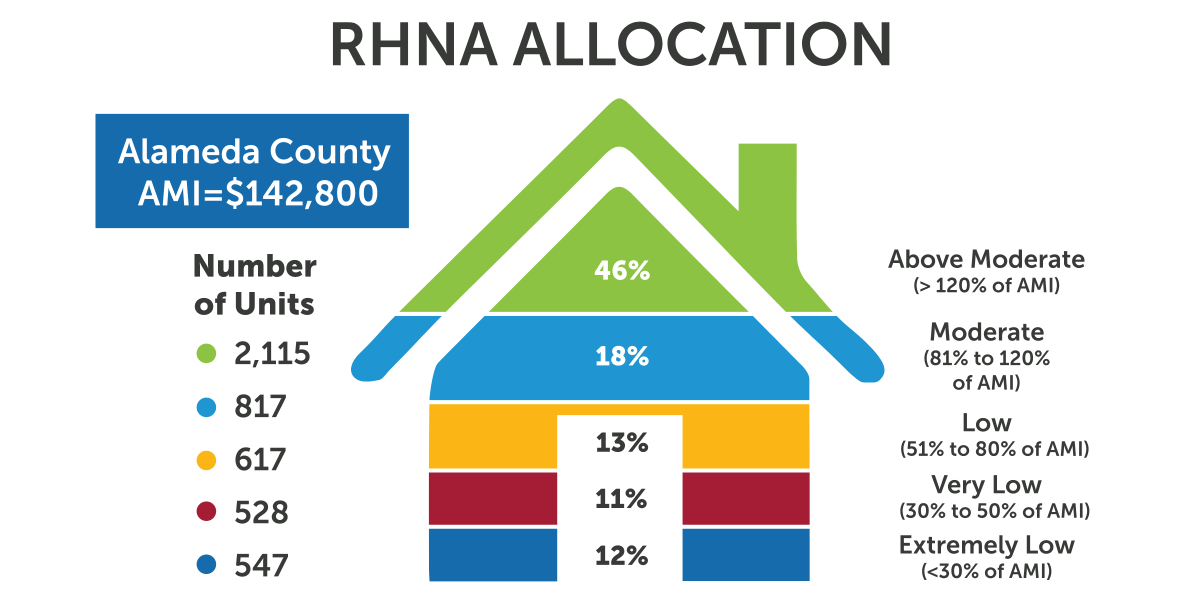
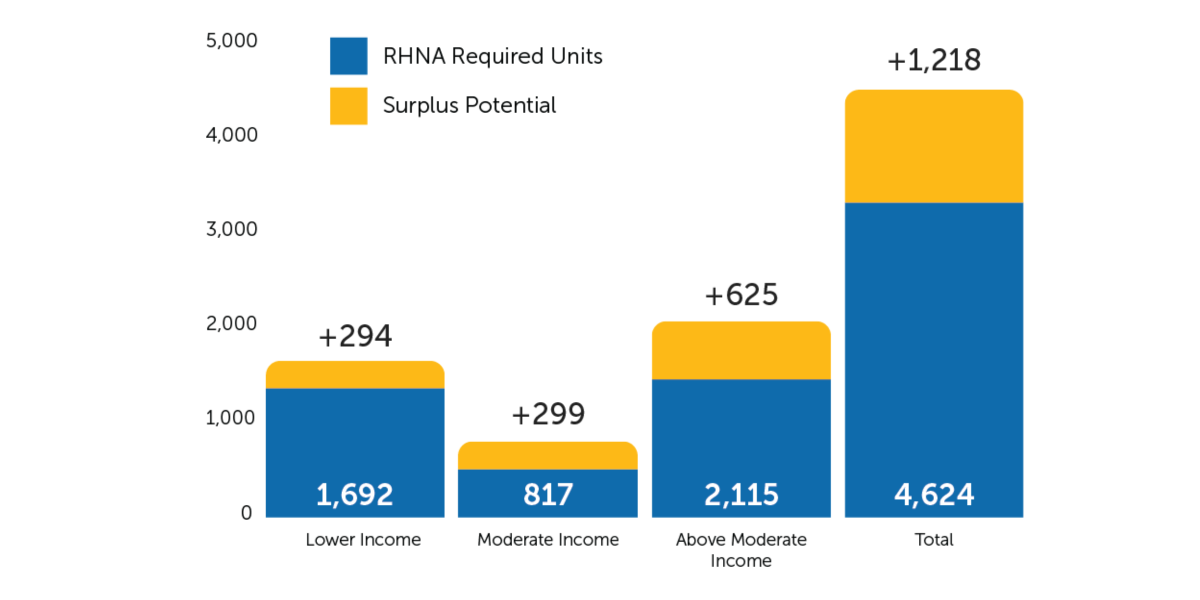
Under a regional planning process required by state law, the City of Hayward must provide for creation of 4,624 new units of housing to meet its “fair share” of the San Francisco Bay Area’s overall new housing production need. While the City is not responsible for the actual construction of these units, Hayward is responsible for ensuring there is adequate land zoned to accommodate the allocation and for creating a regulatory framework under which the private market could produce the housing.
The chart above depicts the RHNA Allocation, or Regional Housing Needs Allocation, for Alameda County. RHNA Allocation refers to the process by which the state of California assigns housing development targets to cities and counties. These targets indicate how many housing units a community needs to plan for over a set period, by income levels (extremely low, very low, low, moderate, and above moderate). The goal is to ensure enough housing is built to meet the needs of people across different income brackets and to address housing shortages. Each community must include these targets in their housing plans (called Housing Elements).
AMI, or Area Median Income, plays a key role in RHNA Allocation because it helps determine how housing needs are divided across different income levels. RHNA sets targets for housing units in categories based on percentages of AMI. In Alameda County the AMI is $142,800 and the income categories are:
- Above Moderate (Greater than 120% of the AMI)
- Moderate (81% to 120% of the AMI)
- Low (51% to 80% of the AMI)
- Very Low (30% to 50% of AMI)
- Extremely Low (Below 30% of the AMI)
Learn more:
California Department of Housing and Community Development —
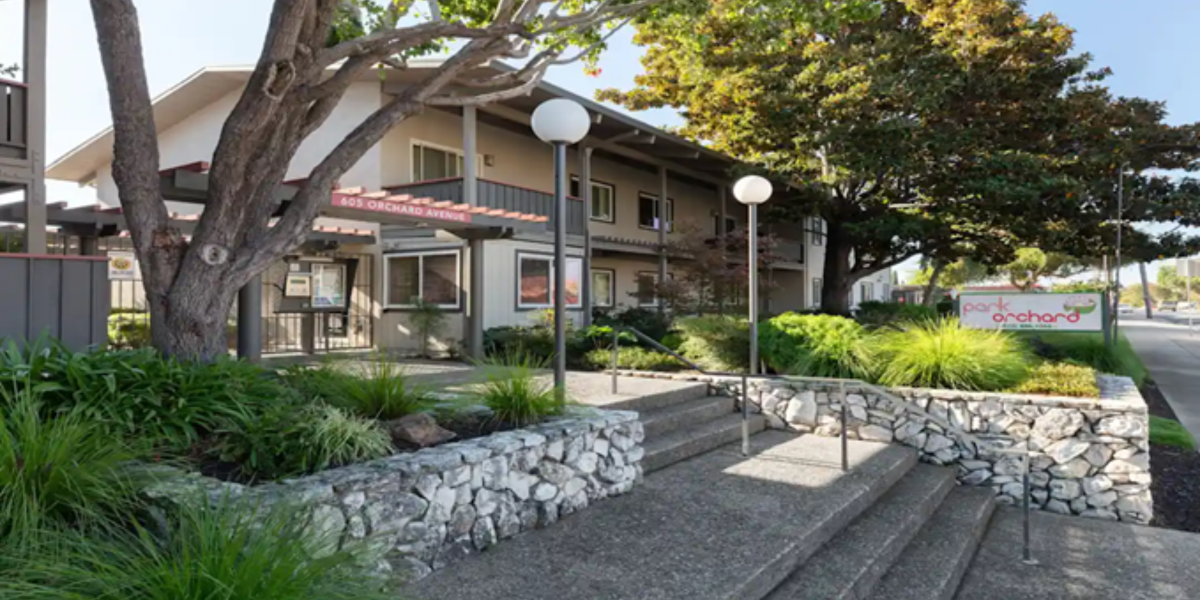
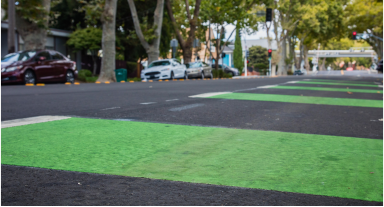
Preserving and protecting our community's existing housing supply is crucial to maintaining affordability and preventing homelessness. By safeguarding affordable housing options and implementing protections like rent stabilization and tenant support programs, we can help ensure that residents are not displaced.
These efforts strengthen community stability, reduce the risk of homelessness, and promote equity by providing long-term housing solutions for individuals and families across income levels, making our community more inclusive and resilient.
|
|


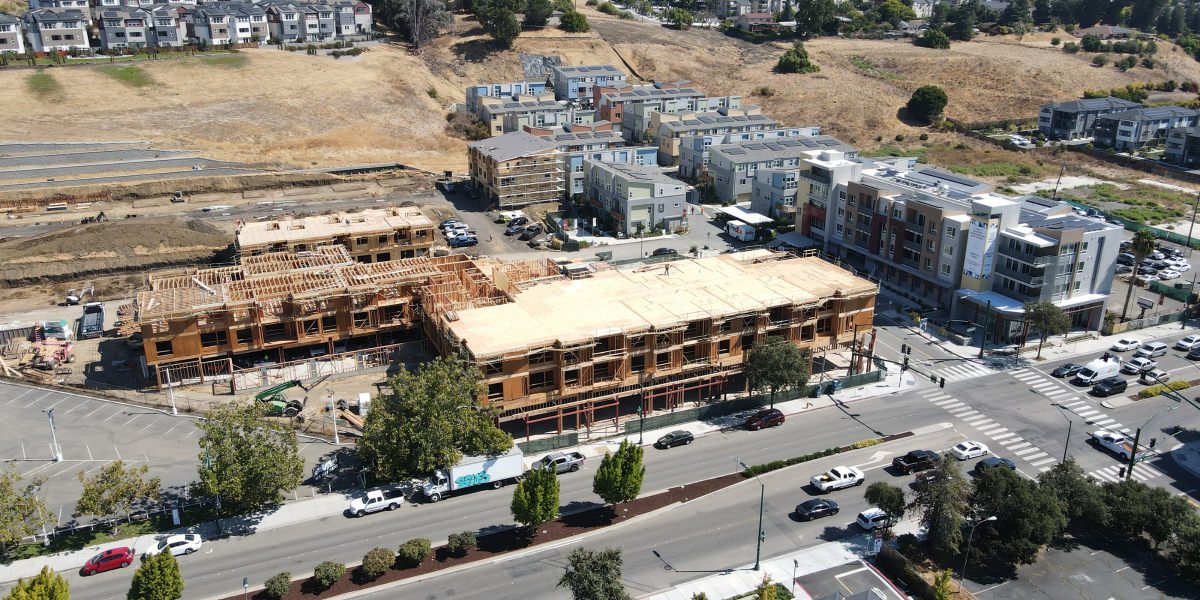
Housing production is essential for a thriving Hayward community because it ensures that residents of all income levels have access to safe, affordable homes. By meeting the housing needs of our growing population, we can support economic growth, reduce homelessness, and create a more diverse and inclusive Hayward for all.
Adequate housing also helps attract businesses, improves quality of life, and fosters long-term stability, making Hayward a more vibrant and resilient place to live.
|
|
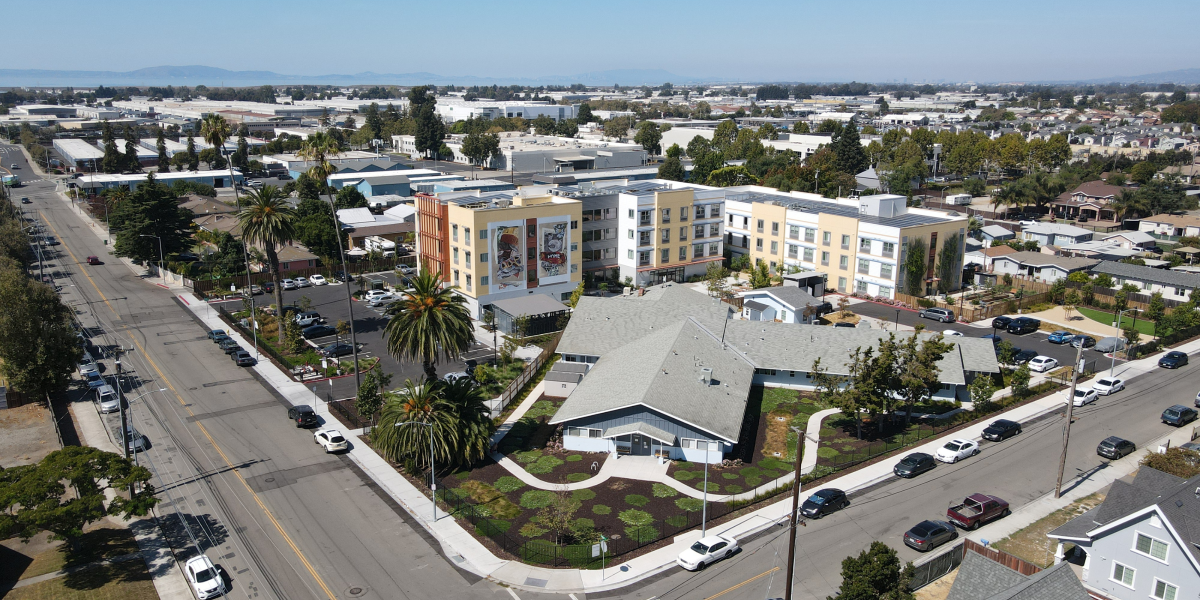
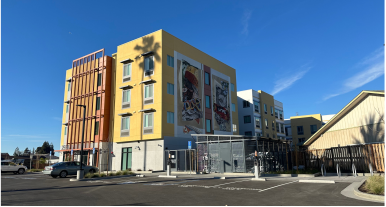
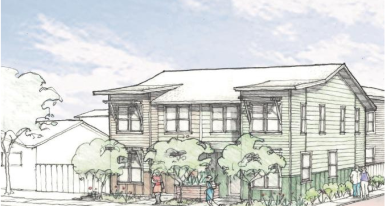
Creating affordable housing is vital to fostering a healthy, inclusive Hayward and ensures that people of all income levels, including essential workers, seniors, and families, have access to safe and stable homes.
Affordable housing promotes economic diversity, reduces housing instability, and helps prevent displacement, allowing Hayward to thrive and grow sustainably. By addressing housing affordability, we can build a stronger foundation for long-term prosperity, well-being, and social equity for all residents.
|
|
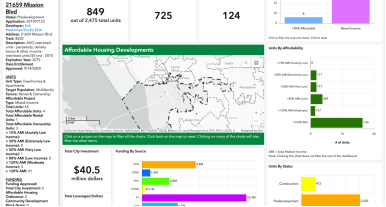
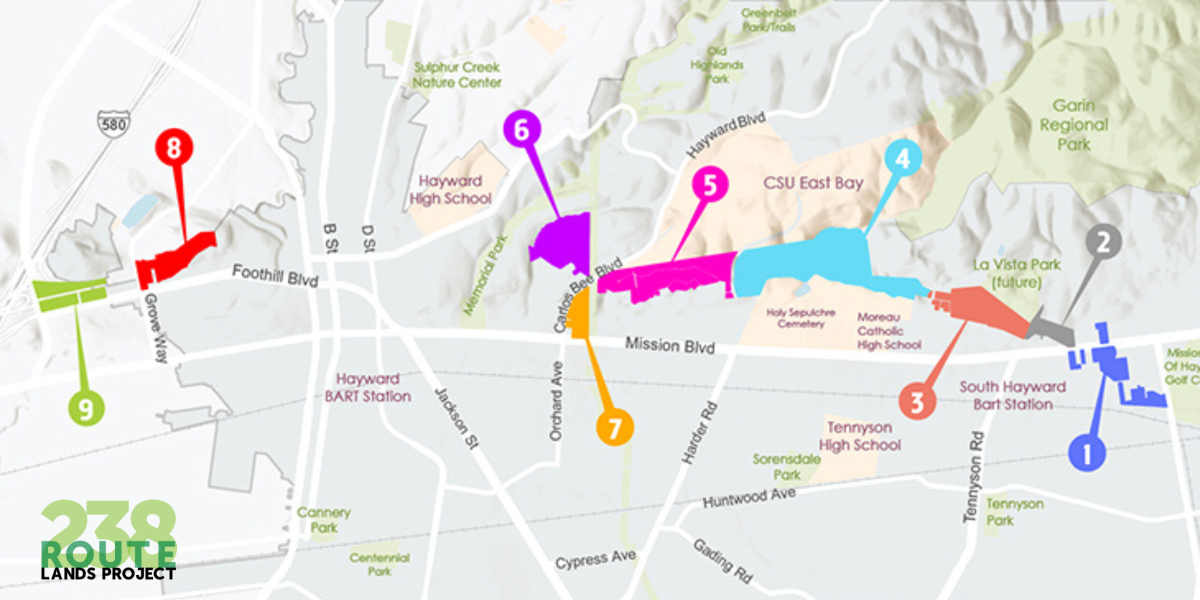
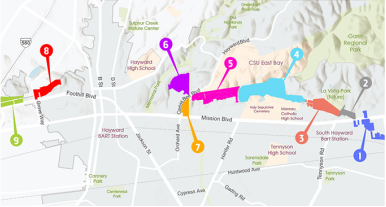
Using public land to support housing needs provides a valuable opportunity to create affordable, accessible housing for Hayward. Public land can be used efficiently to address housing shortages, particularly for low- and moderate-income households, without the high costs associated with private land purchases.
By leveraging these resources, Hayward can build more inclusive and sustainable neighborhoods, reduce homelessness, and promote long-term economic and social stability.
|
|
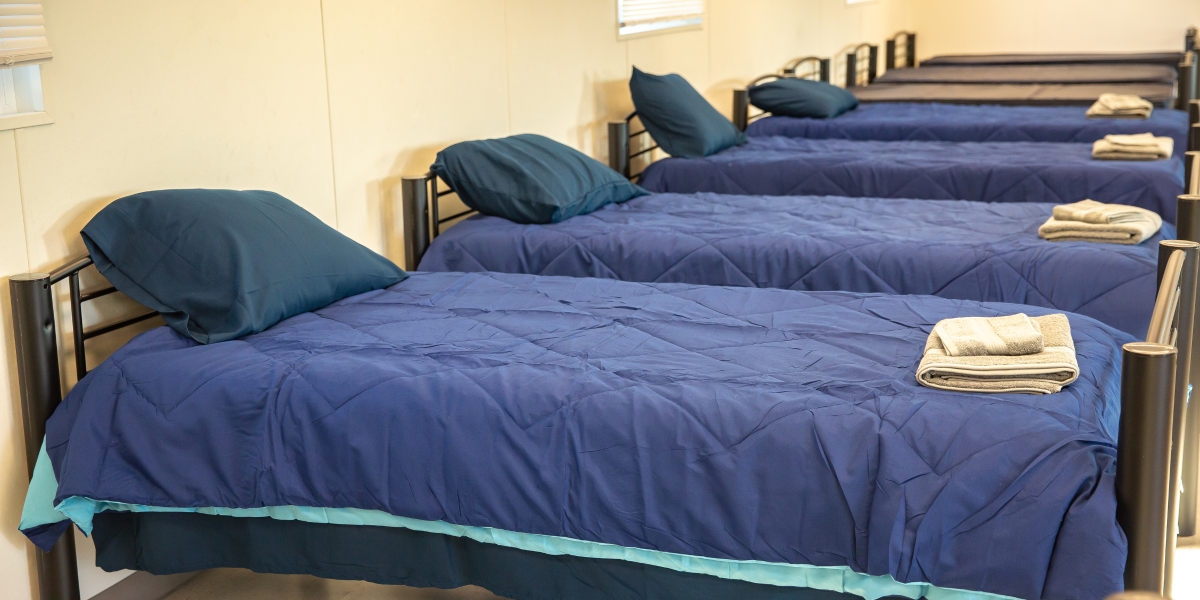
We're addressing homelessness through comprehensive services, housing solutions, and support programs that promote public health, safety, and social stability to ensure the well-being and dignity of all of our residents.
We are working hard to reduce the impact of homelessness on individuals and families, prevent long-term displacement, and foster a more compassionate, resilient community where everyone has the opportunity for a secure and stable future.
|
|
Having a surplus development capacity for new housing provides flexibility to accommodate population increases, address housing shortages, and ensure a diverse range of housing options for residents of all income levels.
By maintaining this capacity, Hayward can proactively plan for sustainable development, attract businesses and investments, and create a balanced, thriving community that can adapt to changing needs over time.
Doing Our Part — Based on current zoning, Hayward has surplus development capacity of 1,218 units above its 4,624-unit “fair share” of the San Francisco Bay Area’s overall new housing production need, also known as the City’s Regional Housing Need Allocation, or RHNA, for a total capacity of 5,842 units, including 1,986 in units affordable to lower-income households.